Why Choose a Salon That Uses Organic Tanning Products?
"Organic" appears on a lot of tanning bottles and means different things on each of them. It is worth understanding what it does and does not cover, because the parts it does cover make a real difference to how your skin feels and how the colour reads.
The active ingredient is the same either way
Every sunless tan works through DHA, dihydroxyacetone, a sugar derivative that reacts with amino acids in the outermost layer of skin to produce brown pigment. DHA is DHA whether the product calls itself organic or not, and it does not penetrate past the stratum corneum. So the difference is never the active. It is everything carrying it.
What changes is the carrier
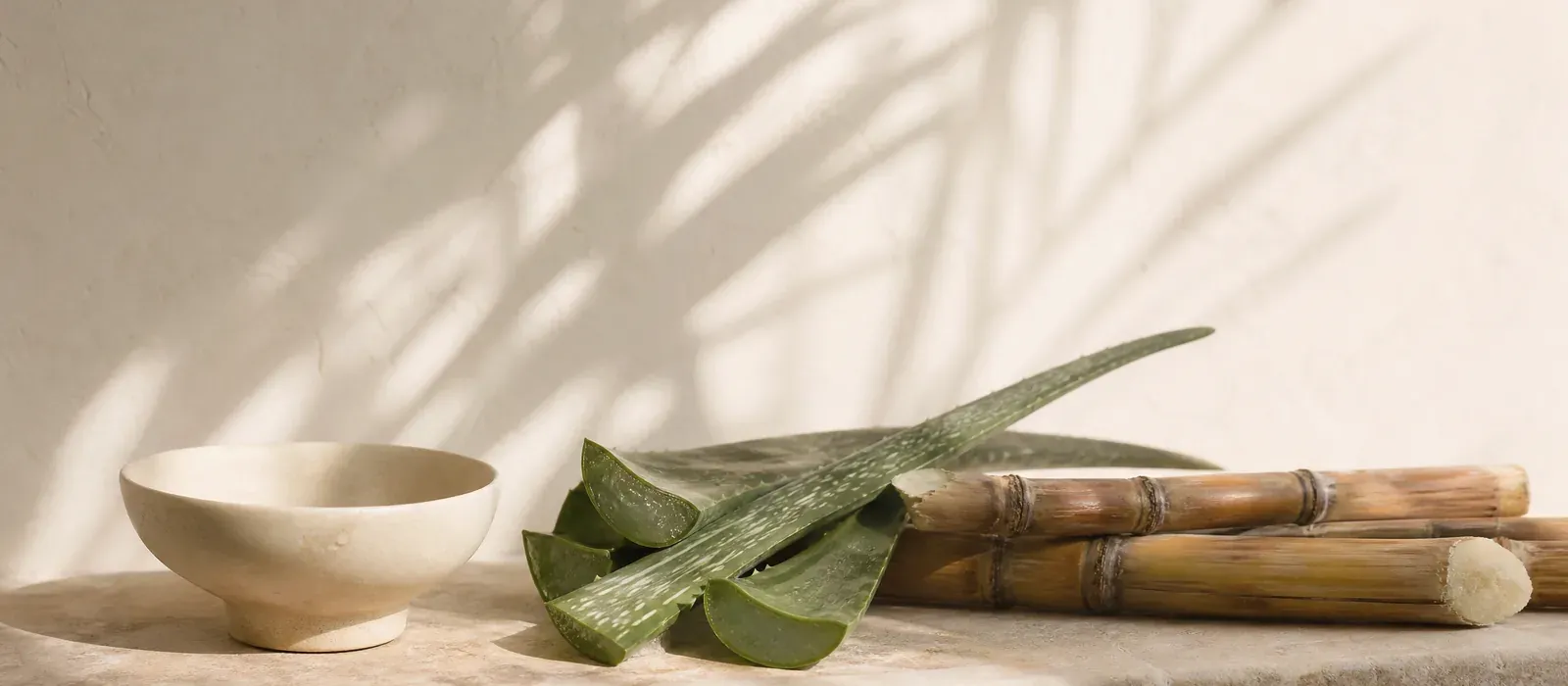
A typical solution contains solvents, preservatives, humectants, fragrance and a cosmetic bronzer for guide colour. Cheaper formulations lean on alcohols that dry the skin, parabens as preservative, and heavy synthetic fragrance to mask the smell of DHA developing. Organic formulations replace those with plant-derived humectants like aloe and glycerin, gentler preservative systems, and either no fragrance or naturally derived scent.
Dry skin is the enemy of an even fade
This is the practical consequence. Alcohol-heavy solutions dehydrate the skin they are applied to, and dehydrated skin sheds faster and less evenly. That is what produces the patchy four-day fade people associate with spray tans generally. A solution built around hydrating carriers holds the colour longer and lets it go more gradually.
The smell is not unavoidable
The biscuit odour people complain about comes from DHA reacting with the skin, and it is worse when the formulation is cheap and heavily fragranced, you end up with the chemical smell plus perfume on top. Better formulations produce far less of it, and clients who have avoided spray tans for that reason alone are often surprised.
It matters more if you tan regularly
A single spray tan is a small exposure whatever the formulation. If you tan every three or four weeks year-round, that is fifteen or more applications a year across your whole body, and the case for a gentler product gets much stronger. The same goes for anyone with eczema, psoriasis, reactive skin, or a history of contact dermatitis.
What to ask for
Ask whether the solution is paraben-free, whether it contains artificial fragrance, and what the hydrating base is. Naked Tan, which we use, is organic, paraben-free, free from artificial fragrance and endorsed by over 3,000 salons, and it develops to a natural brown rather than orange, which is the other half of the argument.
Book your next tan
Naked Tan from a private studio in Secret Harbour. A full body tan is $50. Book an appointment or call 0419 153 609.
Ready to glow?
Book your appointment and let’s create your perfect colour.